

Permanent Residency in Canada
Canada is a land of opportunity and thousands of people seek to become permanent residents and get their PR card every single year. In fact, Canada has been increasing the number of successful applicants each year. The Canadian government plans to invite 351,000 individuals to become permanent residents in 2021 and that number continues to grow!
One of the options to migrate to Canada is to obtain a Permanent Resident (PR) visa. With a PR visa, you will be given permanent resident status. The validity of a PR visa is five years which can later be renewed.
46232
GDP Per Capita (USD, 2019)
37.59
Canada Population (2019)
3864
Average Monthly Income (USD)
Canadian PR Visa
You will have to exclusively apply for the PR visa if you are a student or a worker from a foreign country, it does not automatically make you a permanent resident of the country. Refugees from another country do not automatically become permanent residents. Their status as a refugee must be approved by the Immigration and Refugee Board. Subsequent to this, they can apply for and obtain a PR status. The PR visa does not make you a citizen of Canada; you are still a citizen of your native country. As a PR visa holder, you can enjoy the following benefits:
- Can apply for Canadian citizenship in the future
- Can live, work and study anywhere in Canada
- Eligible for healthcare and other social benefits enjoyed by Canadian citizens
- Protection under Canadian law
How does one obtain a Permanent Resident (PR) visa?
To get a PR visa, you will have to go through an application process. The applications go through elaborate scrutiny. The eligibility for a Canada PR visa is through a points-based system. The applicants are assessed on various points such as age, language, education and work experience.
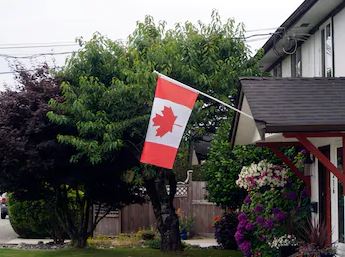
5 Main Categories for Canadian Permanent Residents
Canada offers different immigration programs through which you can apply for permanent residency status. Among these the most popular are:
- Express Entry Program
- Provincial Nominee Program (PNP)
- Business Immigration Program
- Family class Immigration
- Experience class Immigration
Receiving a Canadian PR Card
Your permanent resident card can be used to show that you have PR status in Canada. If you travel outside Canada, you will need to show your card and your passport when you come back on a commercial vehicle, like an airplane, boat, train, or bus. Those traveling outside Canada who do not have a valid PR card, or who are not carrying it, need to apply for a permanent resident travel document before returning to Canada by a commercial vehicle.
A PR card is usually issued for five years, but can sometimes be issued for one year instead. It is valid until the expiry date listed on the card. Canada only sends PR cards to addresses within the country. In some cases, you may have to pick up your card in person at one of the Canadian government offices.
If you find a mistake on your PR card you can ask for it to be reissued. Sometimes we shorten a name on the card if it is too long to fit. This is not a mistake. Find out how to fix a mistake on your PR card.
Adjusting Temporary Status to PR
Whether you are in Canada temporarily to live, work, or study, you are given the option to adjust your status to permanent residency.
Work Permit – Applying for PR through a work permit is very common and can be done through: (1) Federal Skilled Worker Program (FSWP) (2) Provincial Nominee Program (PNP) (3) Canadian Experience Class (CEC).
Study Permit – As an international student in Canada looking for permanent residency, you have very similar options to those with a work permit. The best way to successfully obtain permanent residency with a study permit in Canada is to apply for the Post Graduate Work Permit (PGWP) program and then applying for PR.
Visitor Visa – It’s very rare to adjust your temporary status to PR with this visa but there are some exceptions: if you have a refugee status or a partner that is a Canadian citizen.


Q&A — Canada Permanent Residence Visa
Find answers to frequently asked questions about immigrating permanently to Canada.
- You must first apply to the province or territory where you want to live and be nominated, and.
- After a province or territory nominates you, you must apply to IRCC for permanent residence. An IRCC officer will then assess your application based on Canadian immigration rules.
The new program requires a minimum of 1-year to qualify and the maximum consideration is 6-years. Up to 12 points will be allotted to candidates between the ages of 18 and 35 years. Each year above the age of 35 will reduce the allocation by 1, with no points being awarded as of age 47.
👉 Ontario Immigration Nominee Program (OINP) or Ontario Provincial Nominee Program (OPNP): Ontario PNP offers bright opportunities to immigration aspirants and is considered as easy province to get PR in Canada. This largest Canadian province is famous for easy rules, quick immigration process and high rate of ITA.
To qualify for Canada Immigration, you must be able to secure a score of 67 points. Under the Express Entry Program, you will be able to access your profile for Canada Immigration. Your Express Entry Points will determine your ranking within the pool.
Yes. You don't necessarily need a degree to immigrate to Canada? That's right! Canada has plenty of options for you no matter your skills set or work experience. The key is finding the right immigration opportunity for you.
- Express Entry Program. Canadian Immigration Program that allows immigrants to live and work in Canada as a skilled worker through Express Entry. ...
- Family Class Sponsorship. ...
- LMIA Work Visa. ...
- The Provincial Nominee Programs (PNP) ...
- Canadian Investor Immigration.
- Alberta Express Entry Stream;
- Ontario Human Capital Priorities Stream;
- Saskatchewan International Skilled Worker Category;
- Nova Scotia Demand - Express Entry Stream; and.
- Manitoba Skilled Worker Stream.
All landed immigrants in Canada must pay the right of permanent residence fee (RPRF), which is $490 per person.
- Rimouski, Quebec
- Timmins, Ontario
- Quesnel, British Columbia.
- Abbotsford, British Columbia.
- Lévis, Quebec.
- Brockville, Ontario.
- Weyburn, Saskatchewan.
One year of full time work experience in a qualifying occupation. And be able to achieve 67 points or higher based on the assessing criteria (age, education, language skills, work experience, adaptability)
- Temporary Work Visa. The temporary work visa is an easy way to immigrate to Canada for 2 reasons. ...
- Temporary Work Visa - Global Skills Strategy. The Global Skills Strategy is another fantastic way to immigrate to Canada easily. ...
- Student Visa - Post Graduate Work Program.
Why Work with us to Ensure Your Canadian PR Visa is Successful
Living in Canada is an amazing experience for any citizen. Canada has one of the highest standards of living in the world. If you want to ensure your best chances at getting an approval on your PR application, then we recommend you consult with us before submitting. We have helped thousands and thousands of immigrants successfully enter Canada on a PR permit, and we can help you too!
Actualize your Goal to Immigrate to Canada
The first step towards immigrating to Canada is getting an assessment of your case. Please click the "Get Started" button so we can determine your eligibility to move to Canada.